This one’s about birds; no bikes today. All photos from my Fujifilm X-T5 with 70-300mm lens and 1.4x teleconverter. This combination gives me 420mm reach on a APS-C which is like 630mm full frame equivalent, but the aperture isn’t great so I struggle a bit with crisp photos unless the lighting is very good.
But enough nerding about cameras, let’s nerd about birds.
George C. Reifel migratory bird sanctuary is undoubtedly the top of the list when it comes to birding destinations in greater Vancouver, but 11 months into taking this hobby seriously and I finally went for the first time – I did try to go back in mid-April but I didn’t realize that it was reservation-only on busy days, so instead I went to nearby Brunswick Point (and got like eight new lifers on that walk! It was easier back then…). I was glad to have friends Nicole and Kris join me, who know the lay of the land as well as what birds to anticipate where. This was also the first time I have gone birding with experienced birders.
Almost immediately I got a new lifer thanks to Nicole’s hawk eyes, the black crowned night heron – pretty much the only place to reliably see one, and reliably in a tree right by the entry to the park. Unfortunately the photos are shit because it was curled up napping within the branches of said tree. Vaguely night-heron shaped, though!
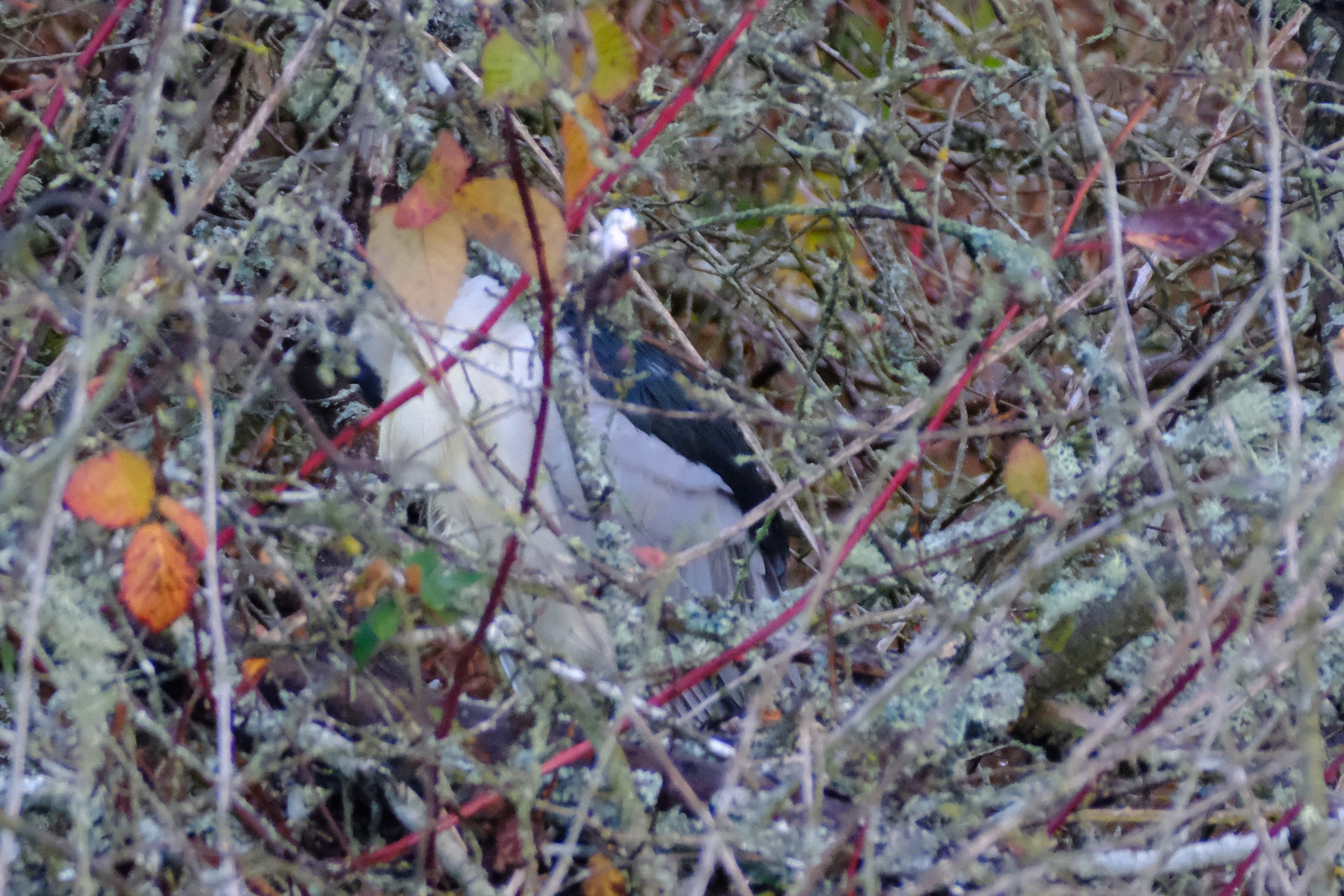
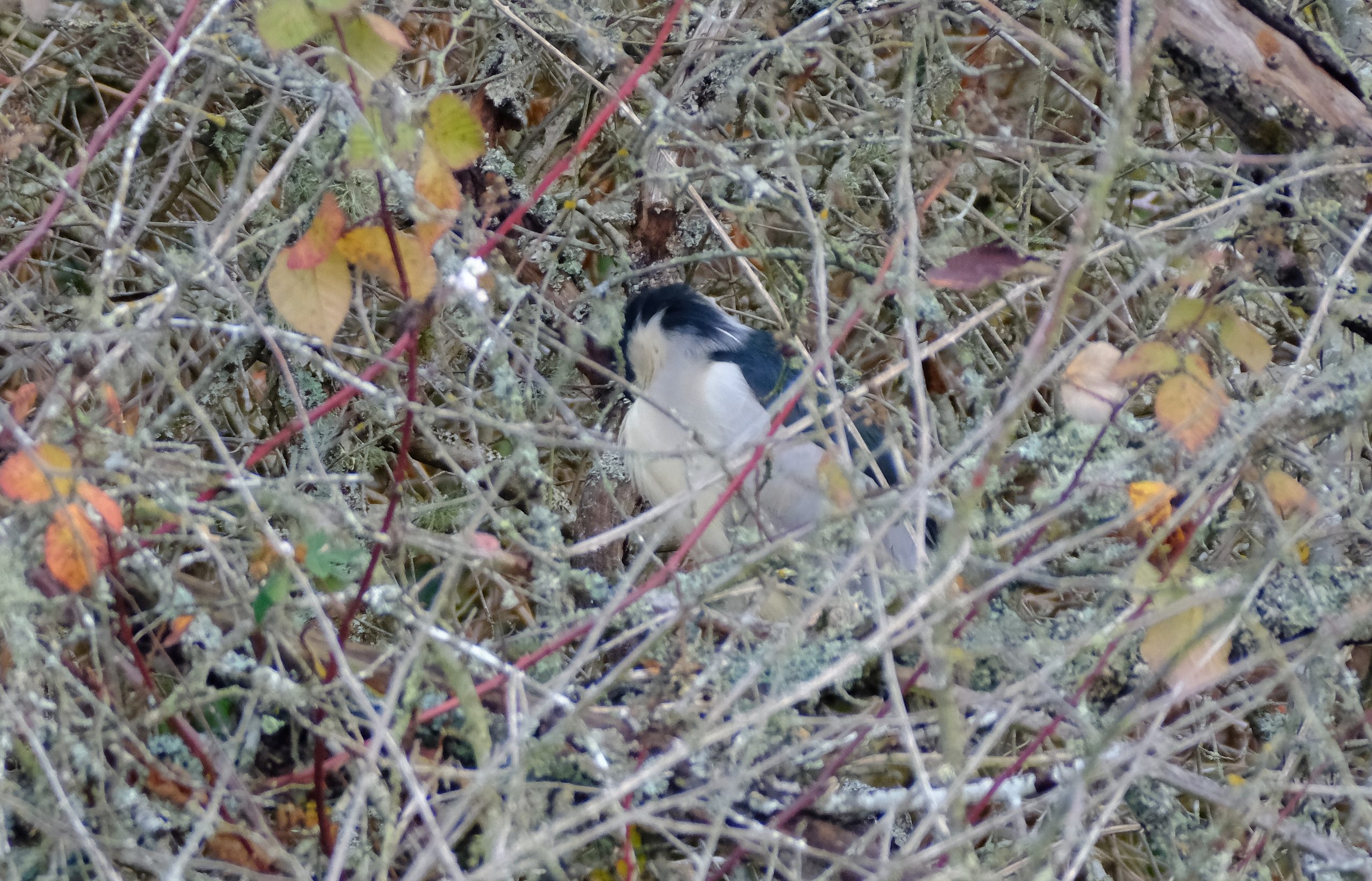
Just past the night heron was the London Slough, where countless ducks of a variety of species were chilling, and some logs were absolutely filled with these guys – long billed dowitchers, I think? Among the ducks were gadwalls, coots, wigeons, green-winged teals, and others.


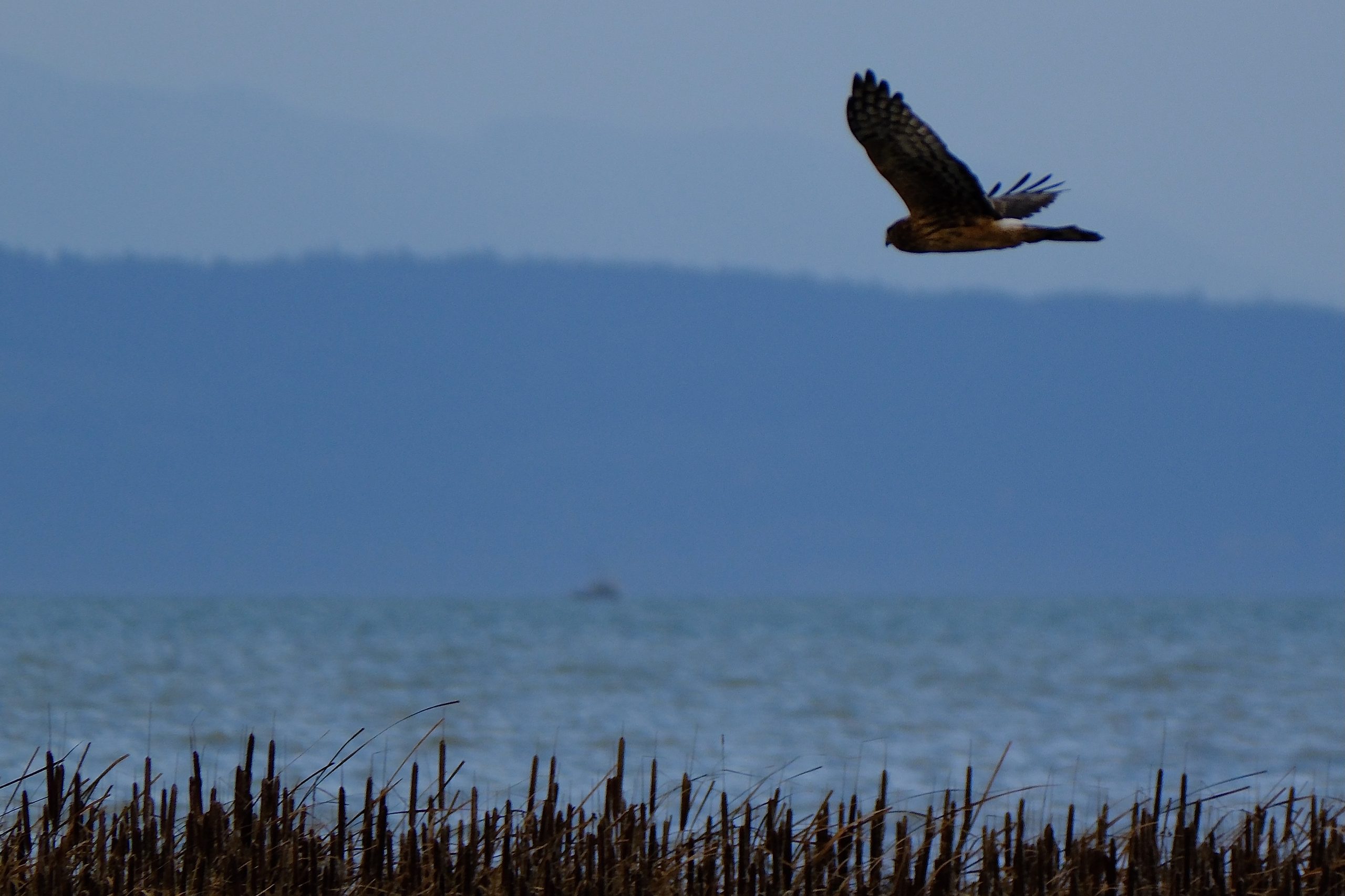
We walked out to the seaside dyke, where northern harriers were numerous in addition to the usual bald eagles and great blue herons. Plenty of ducks were hidden from view amonst the reeds as well. The harriers were too far off for me to get detailed photos, but here’s a couple good enough for an ID:

And I like this composition of a bald eagle, gull, and passing duck:
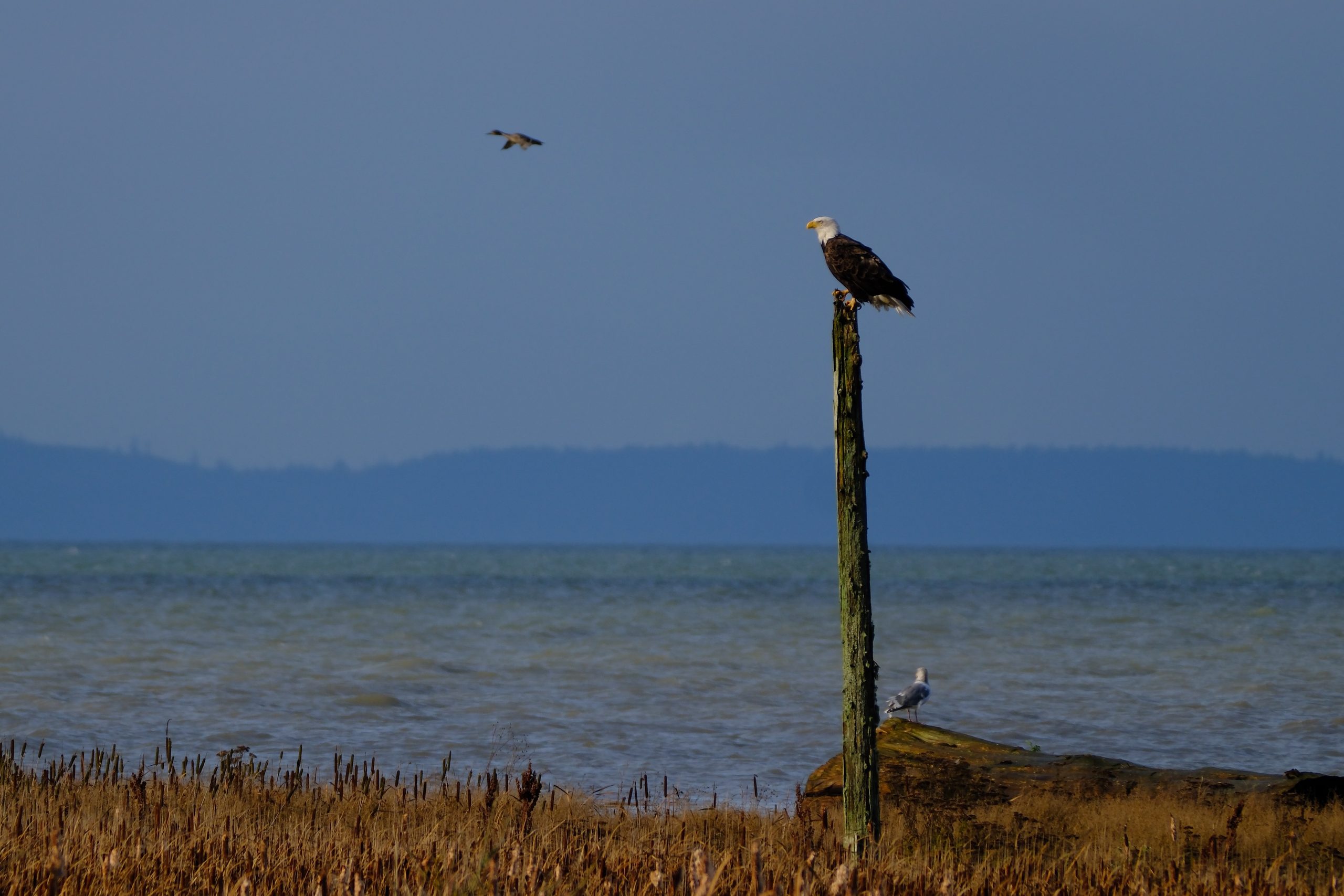
I believe that’s Galliano Island in the distance, looking a lot closer than it is thanks to the telephoto lens.
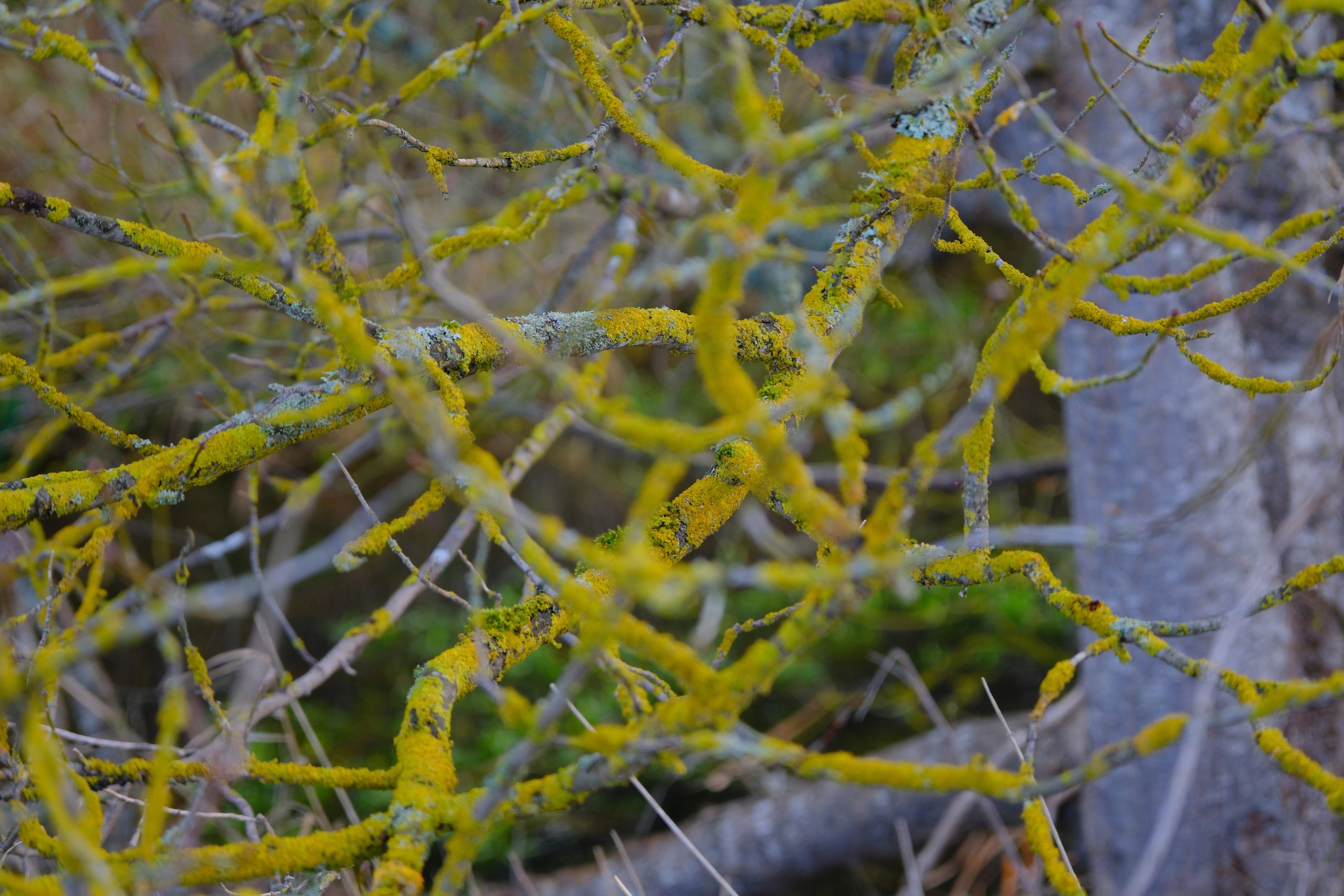
The ocean air and general growing conditions of this spot made for some pretty cool lichen on a few trees:
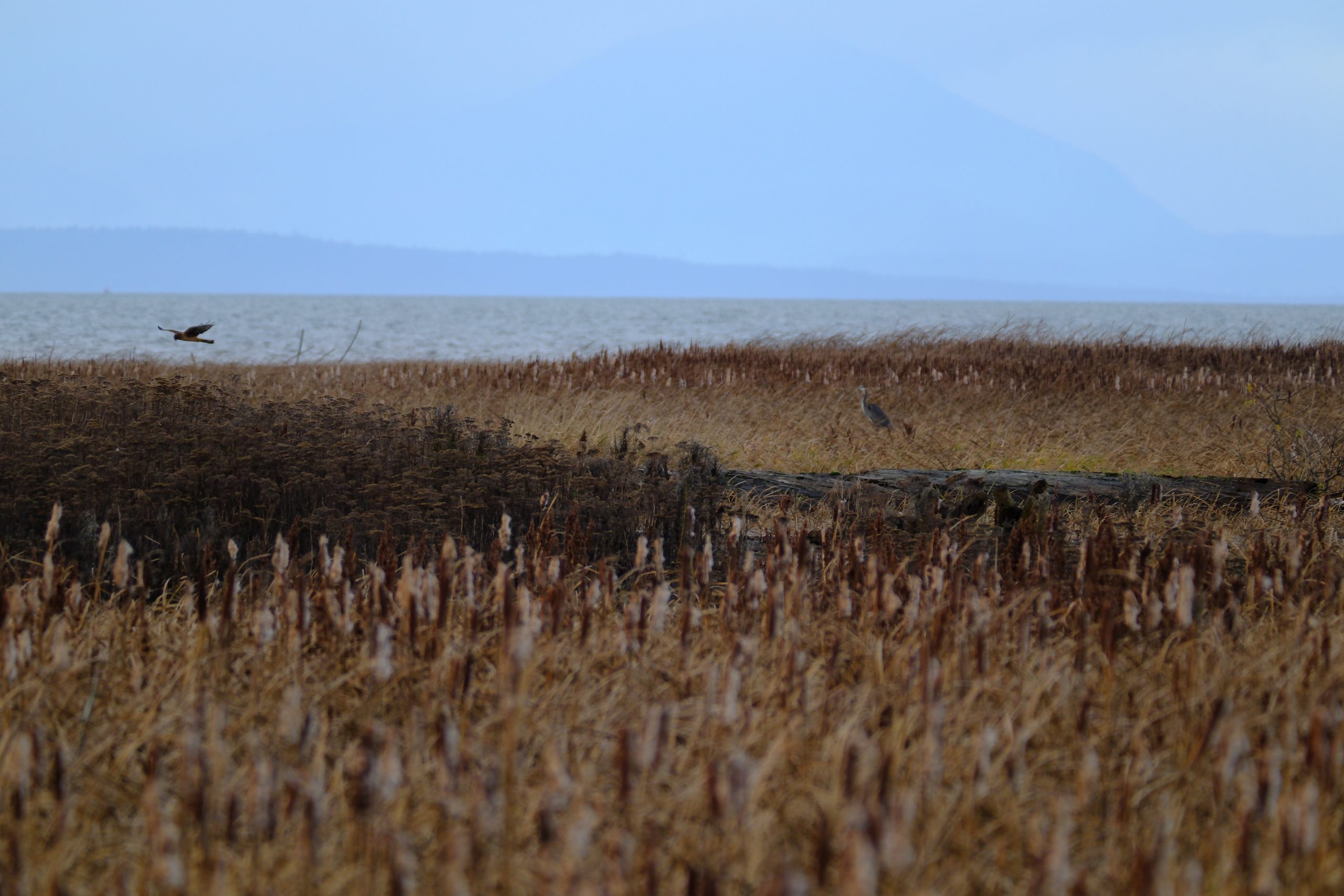
For a bigger picture of the scene along this seaside dyke, below are a harrier and great blue heron; a short-eared owl was hidding about centre-frame which I was able to get a good view of thanks to Kris’ scope; unfortunately it never popped back out after dropping out of view while we were there, not that the photo would have been very detailed from this distance anyway.
Right around here a marsh wren (now known as a western marsh wren) was uncharacteristically friendly and allowed me to get a few decent photos:
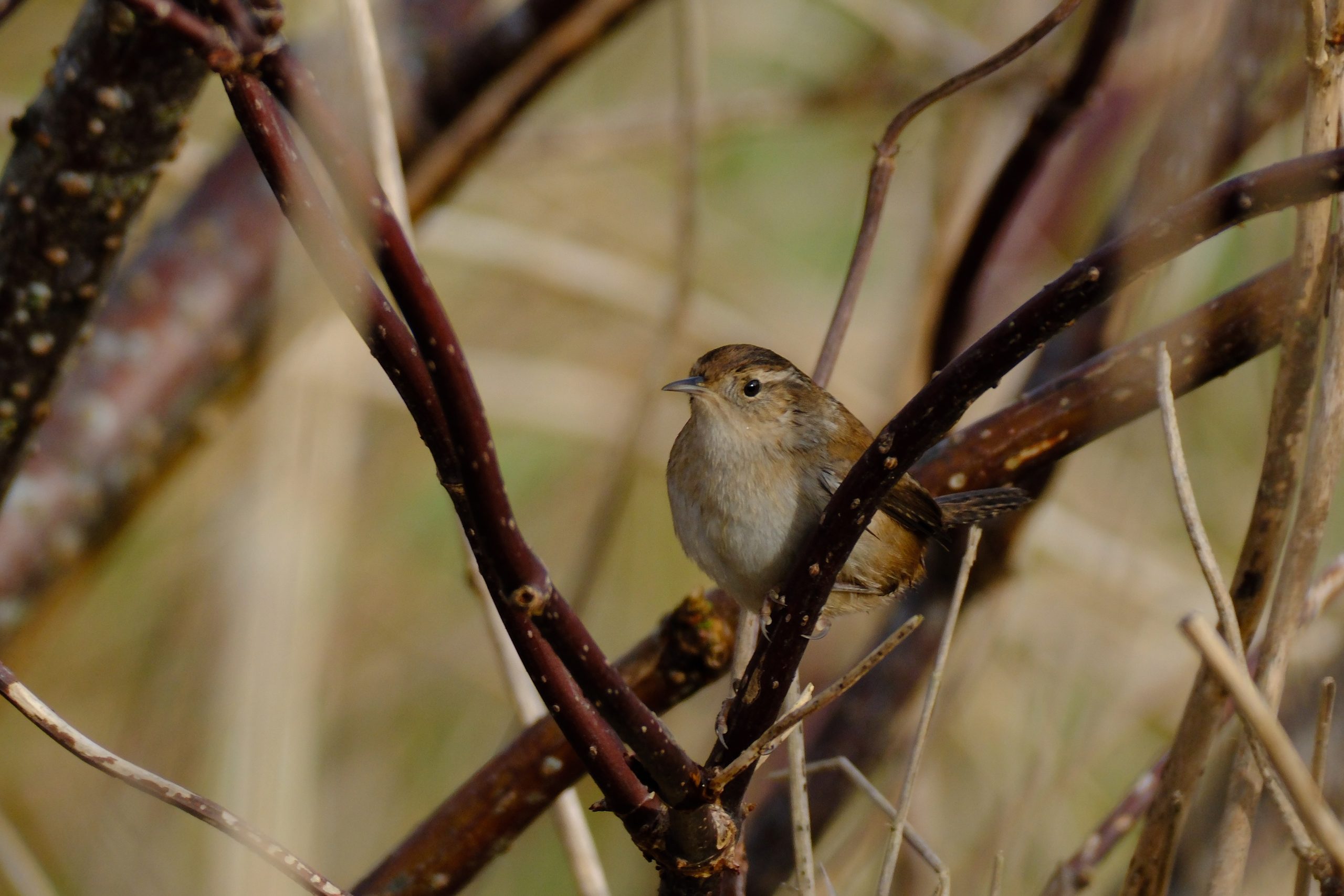
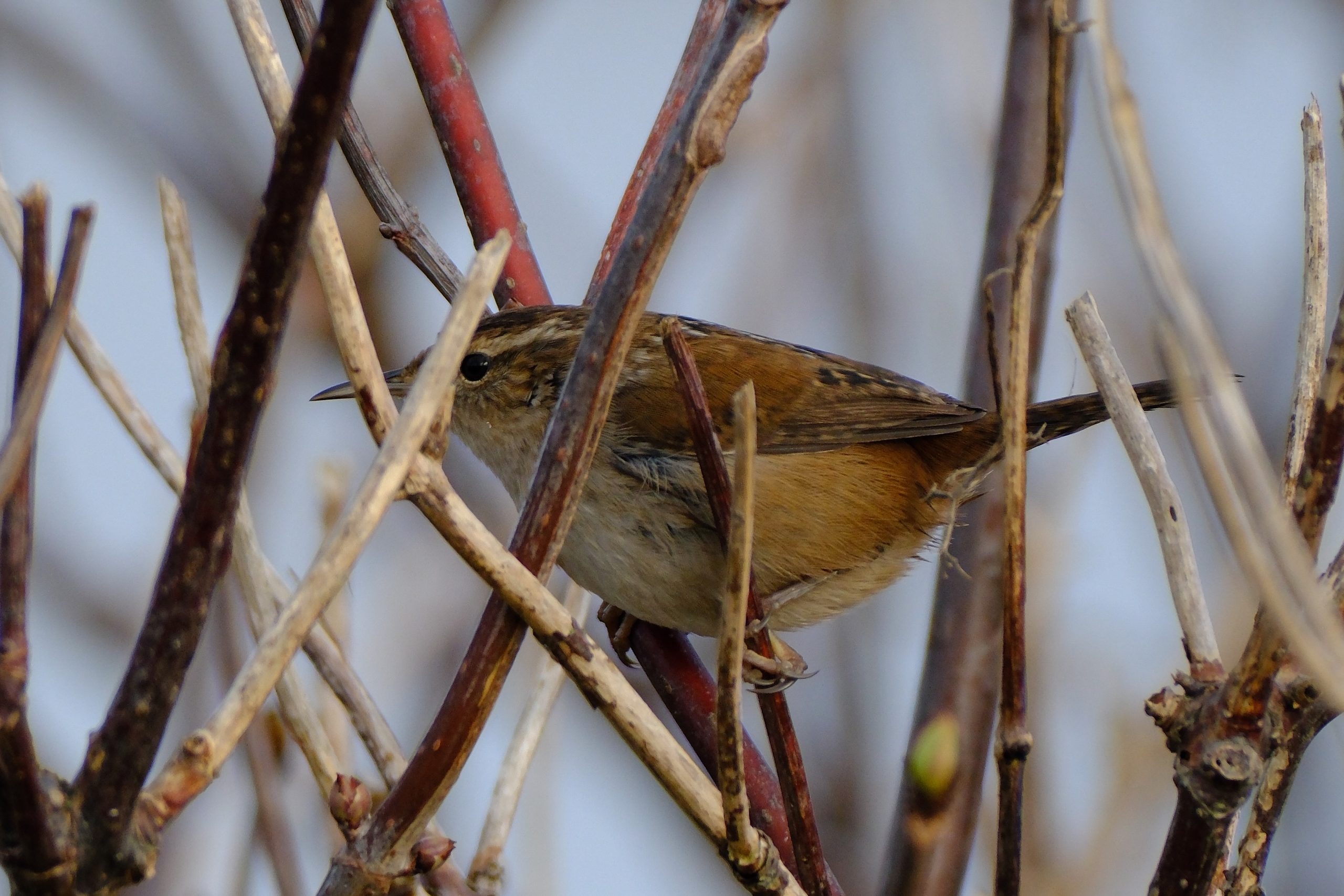
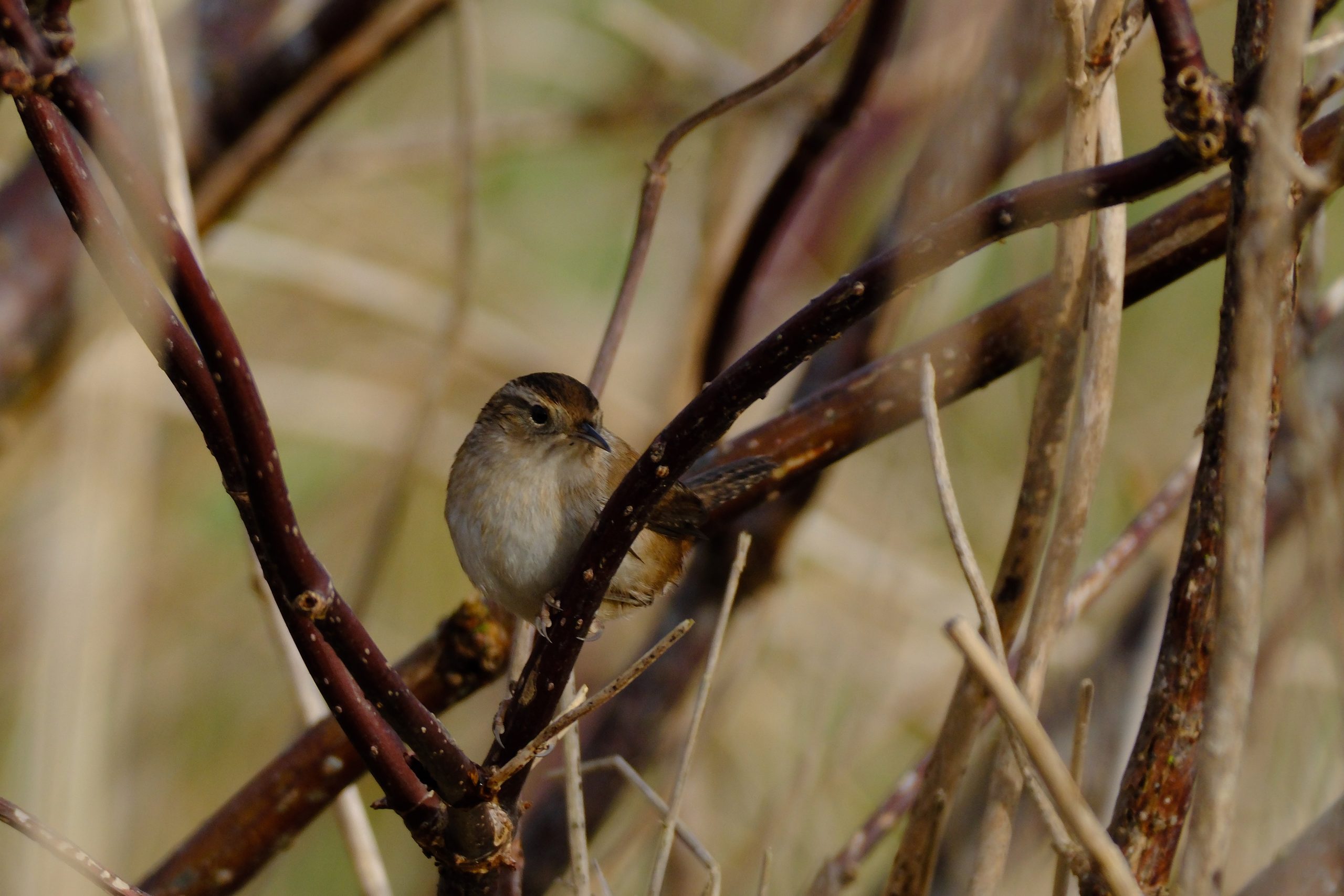
I was pretty stoked about this because while I’ve seen them before, I’ve never been able to get a photo!
I also came across a family of cedar waxwings, which surprised me because I thought they would have left town by now. They only eat berries, so they tend to head to warmer climes by this time of year. Most of them were quite fluffy juveniles, perhaps not quite ready to migrate?
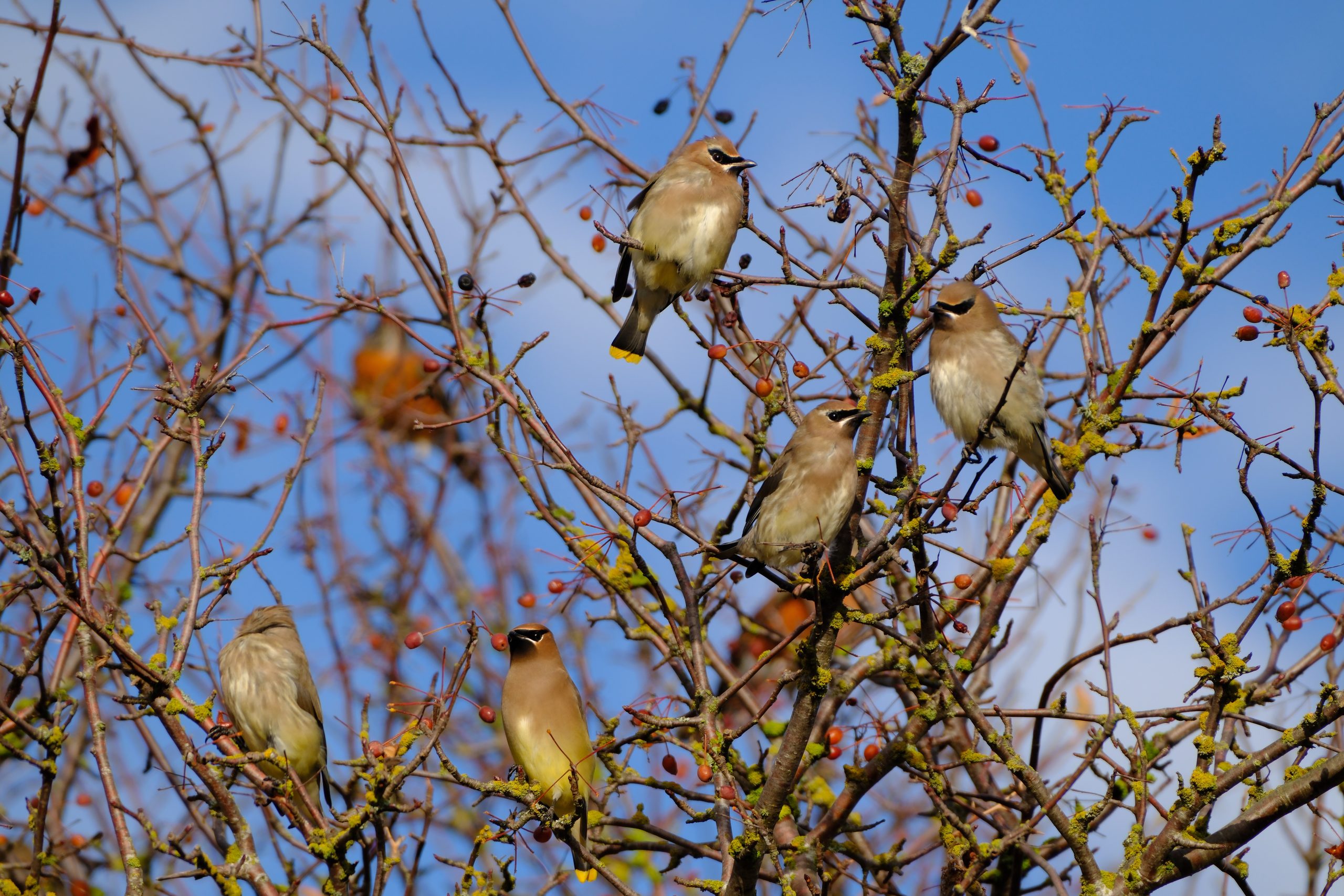
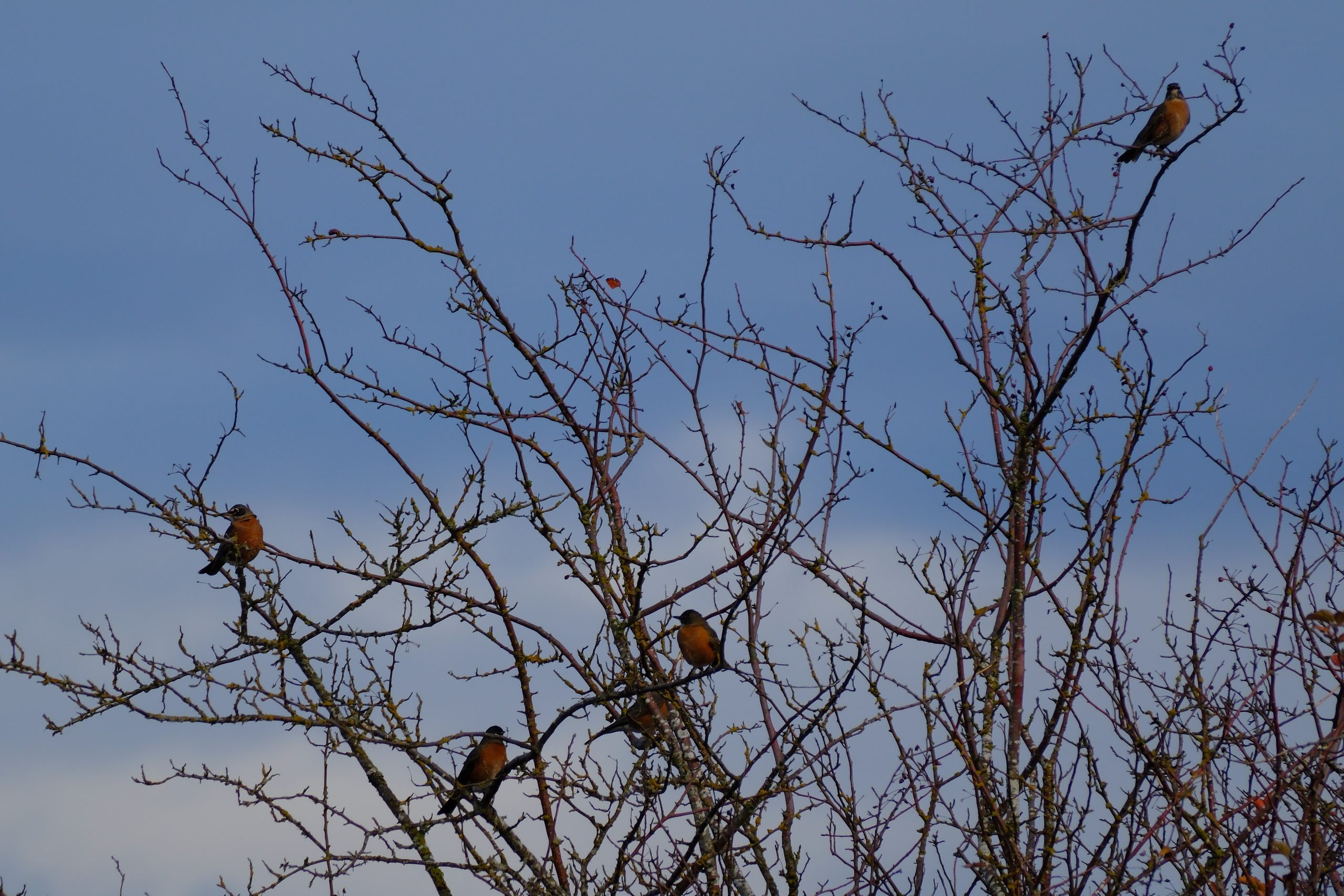
Same tree also housed a crew of robins:
Pointing the lens back out to shore, a couple more eagles standing guard while a flock of red-winged blackbirds passed by. With the considerable amount of reeds in this area, the red-winged blackbird population is quite significant. Not an exotic or favourite bird by any stretch, but I would credit as my “spark bird” to get me into birding because up until last year I didn’t realize we had them here.


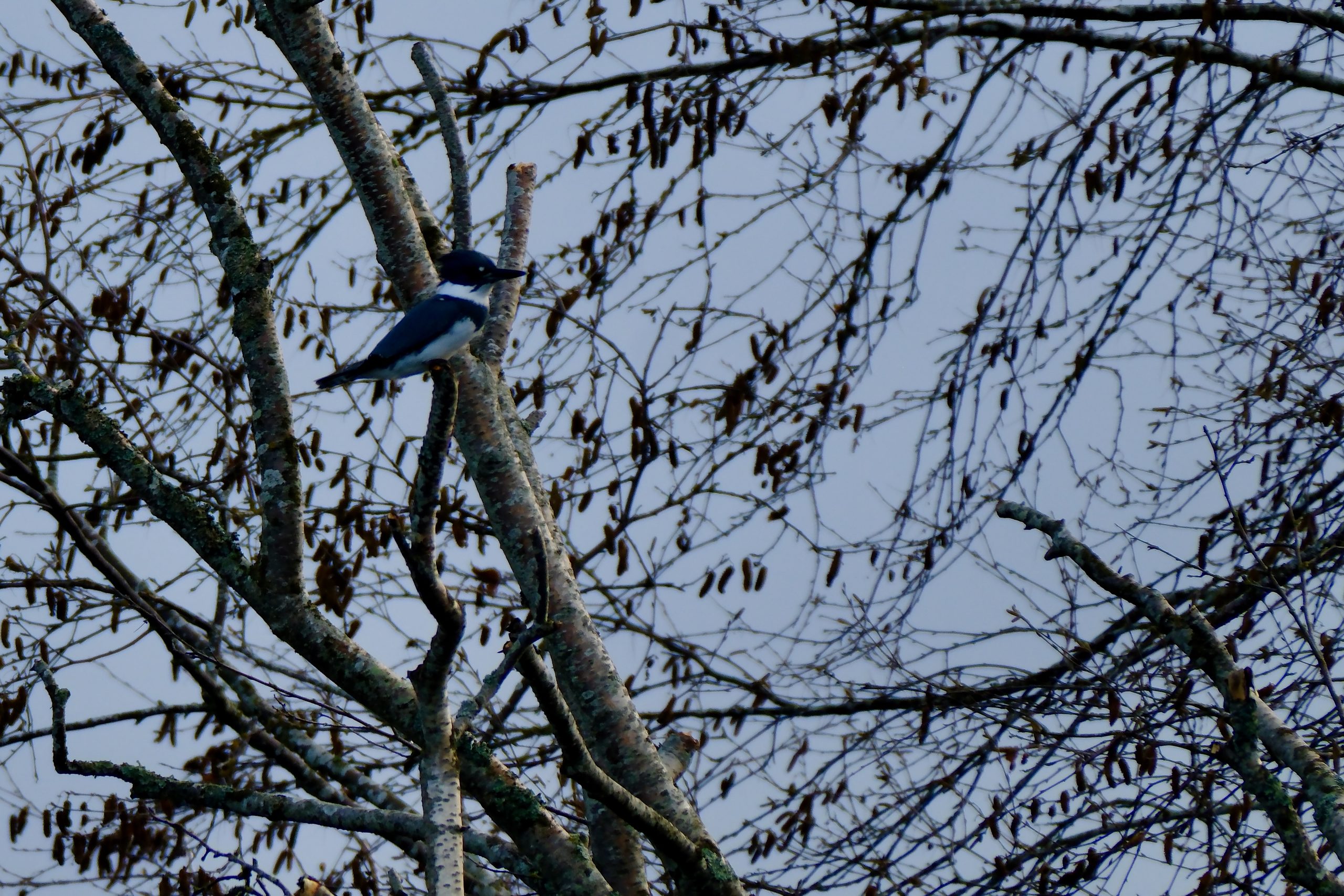
But what is my favourite bird? Well, despite being fairly common locally as well I would put the belted kingfisher top of the list – they are pretty exciting to watch and the size of their head relative their body is hyperbolic. I didn’t get an up-close shot, but here’s a couple photos from today:
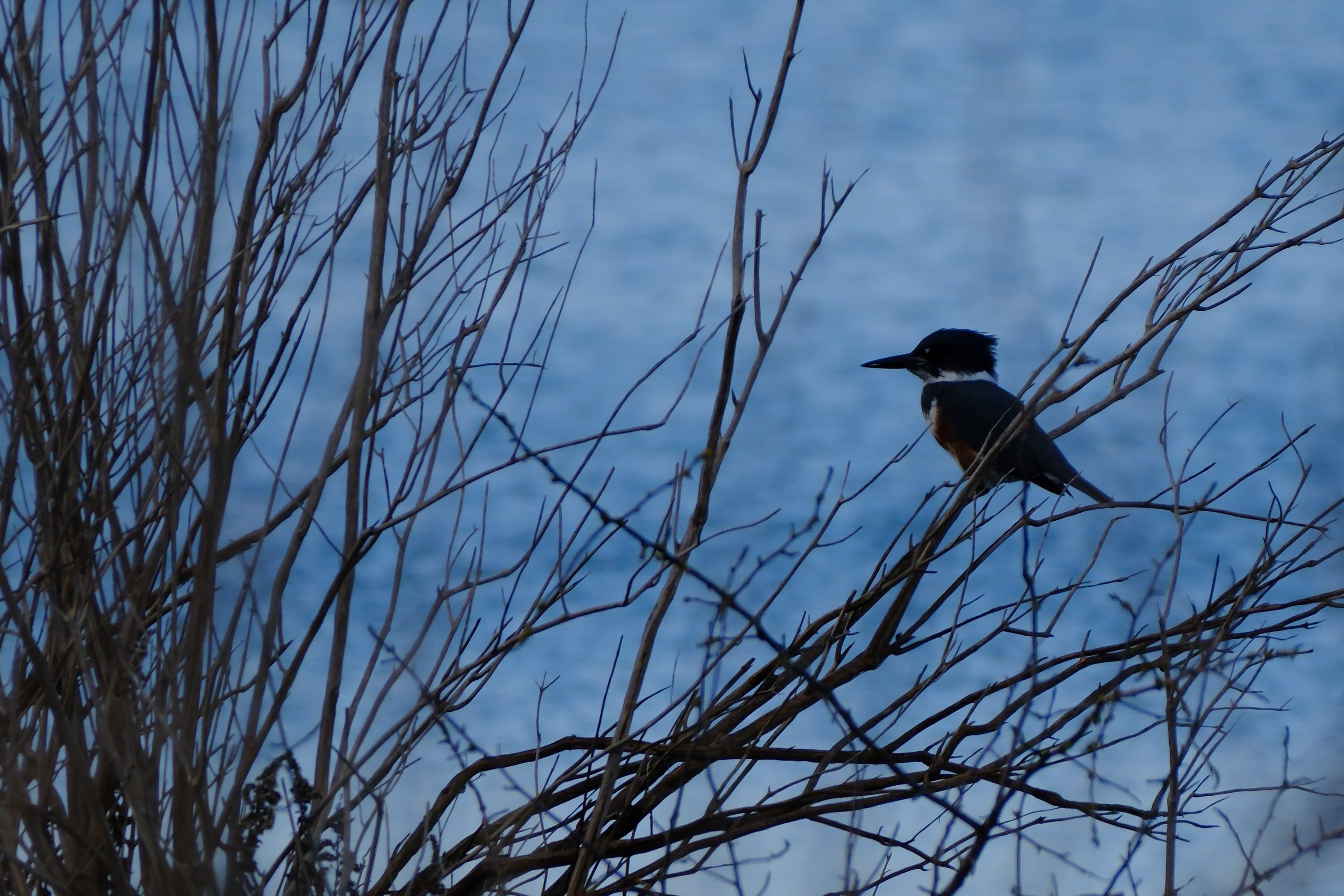
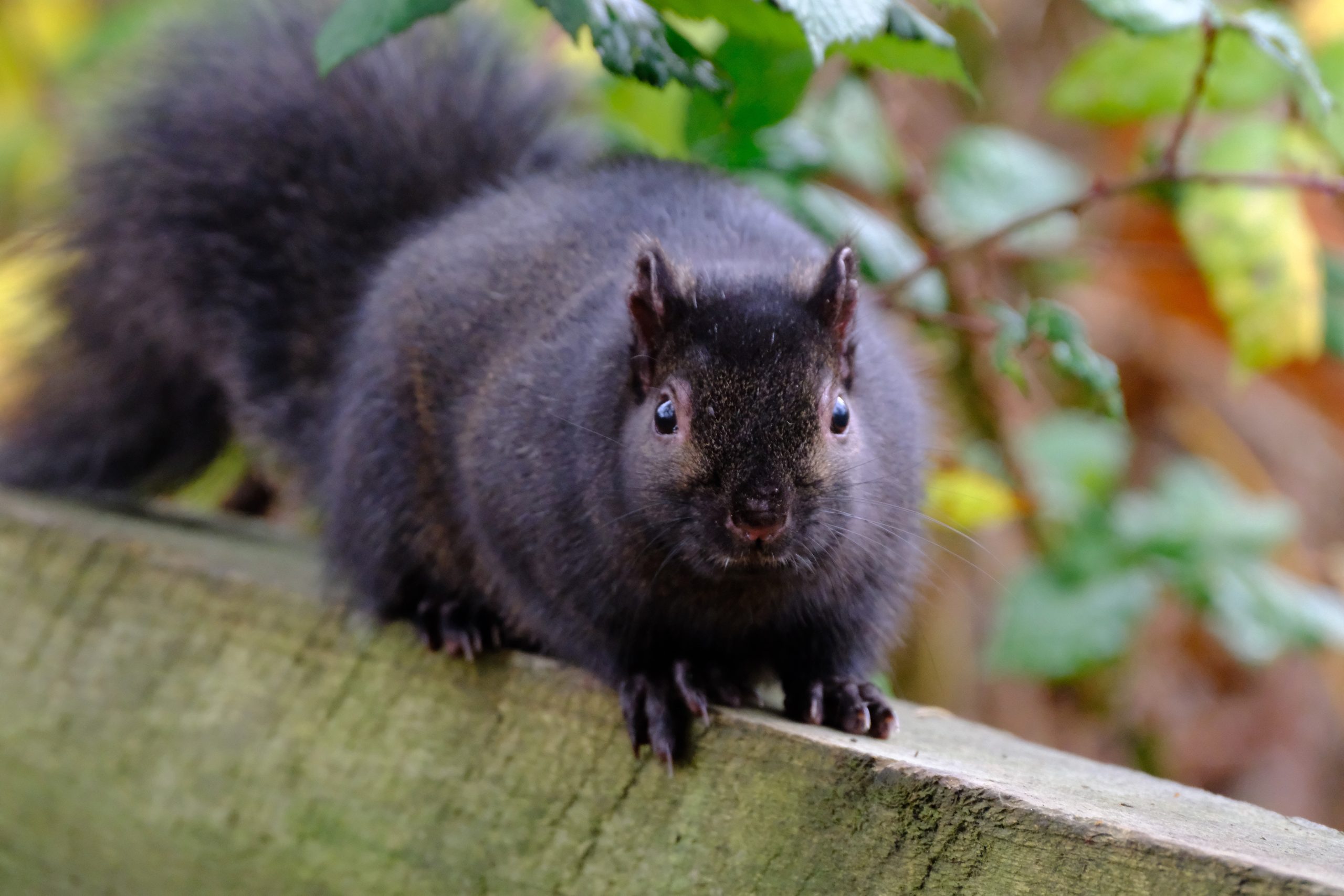
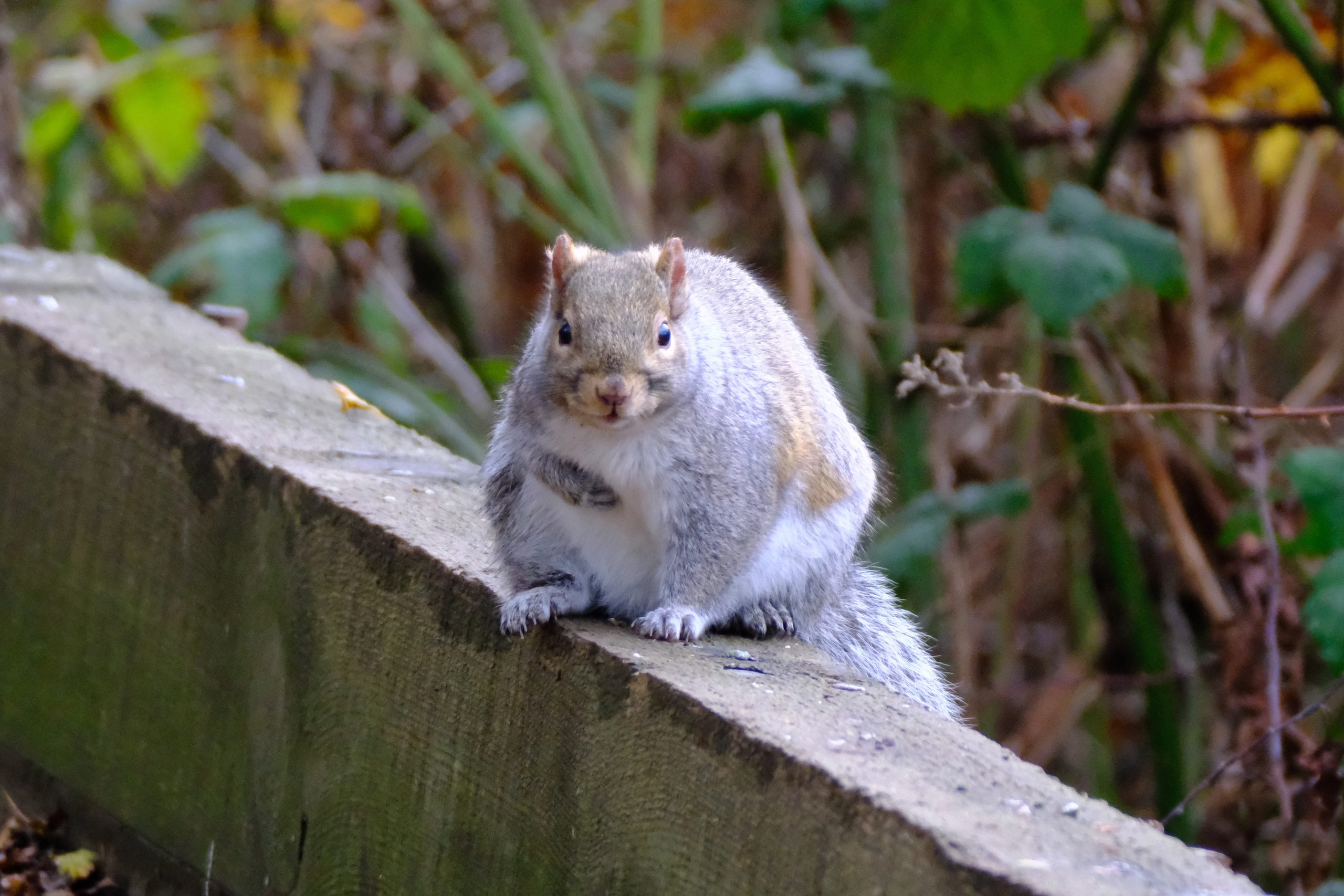
We were scanning for owls when we instead came across some of the chonkiest squirrels any of us had seen before; these guys deserve the same attention and gamification that the bears in Fat Bear Week get!
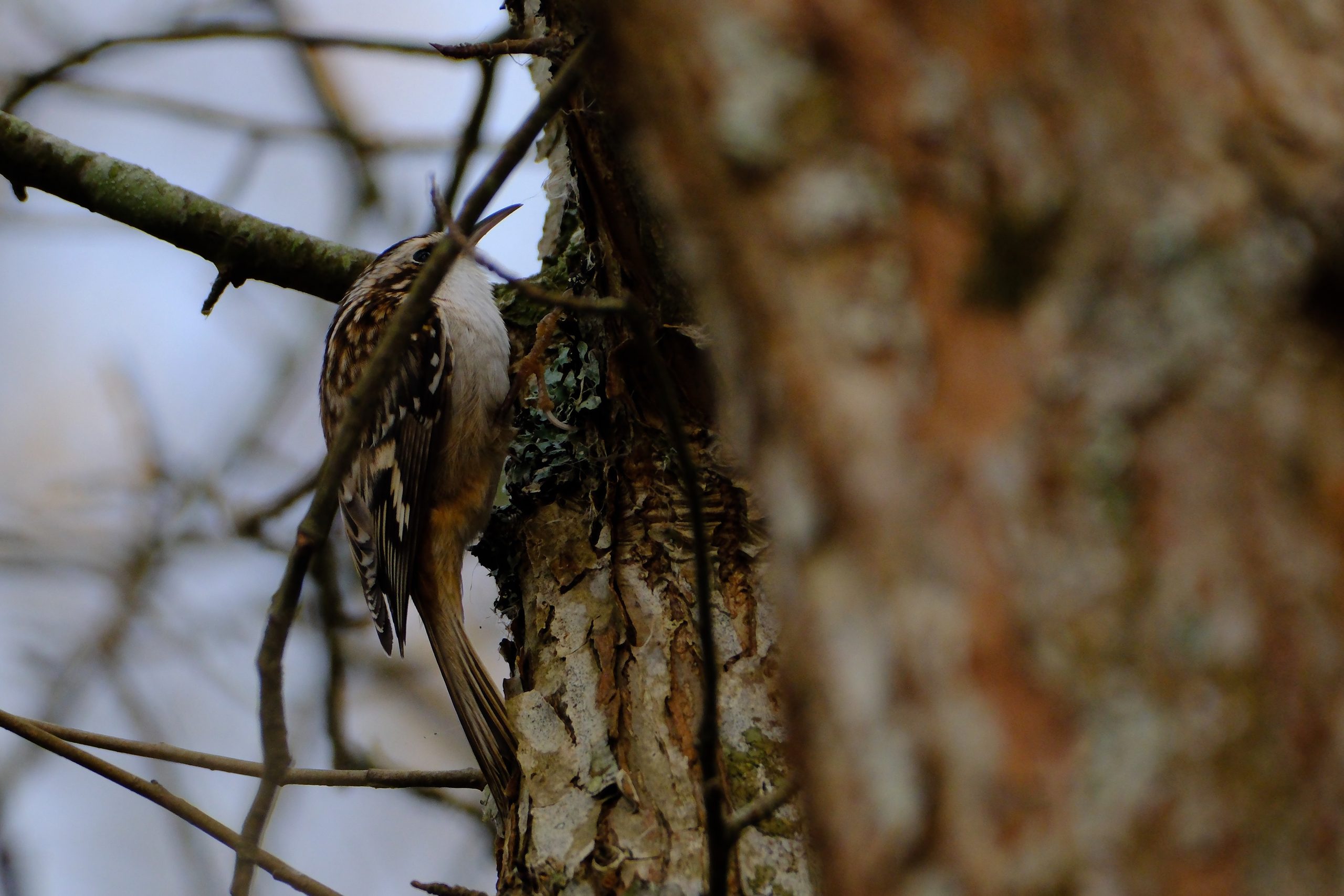
As we drew close to finishing our lap, a tour group were observing a brown creeper:
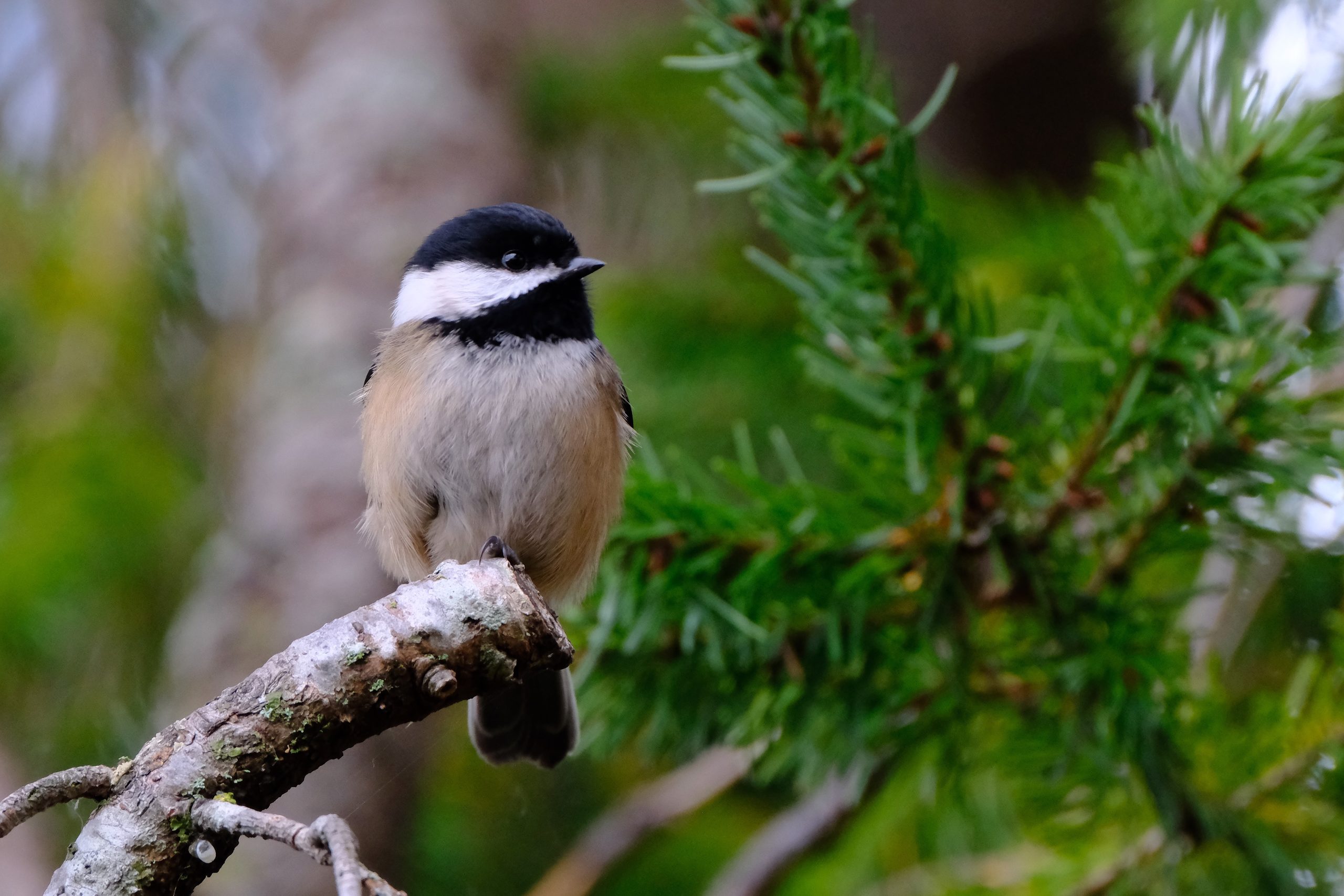
Perhaps it was because we were close to the feed zone, but suddenly there were a lot of small birds to observe – the black-capped chickadees had been following us and somewhat aggressively trying to get treats, but less social birds like the red-breasted nuthatch and the chestnut backed chickadee were also present. I find it rather fascinating that chestnut-backed chickadees have such different personalities than the very similar looking black capped; they are much quieter and more shy, and typically stick to coniferous forested areas around here.
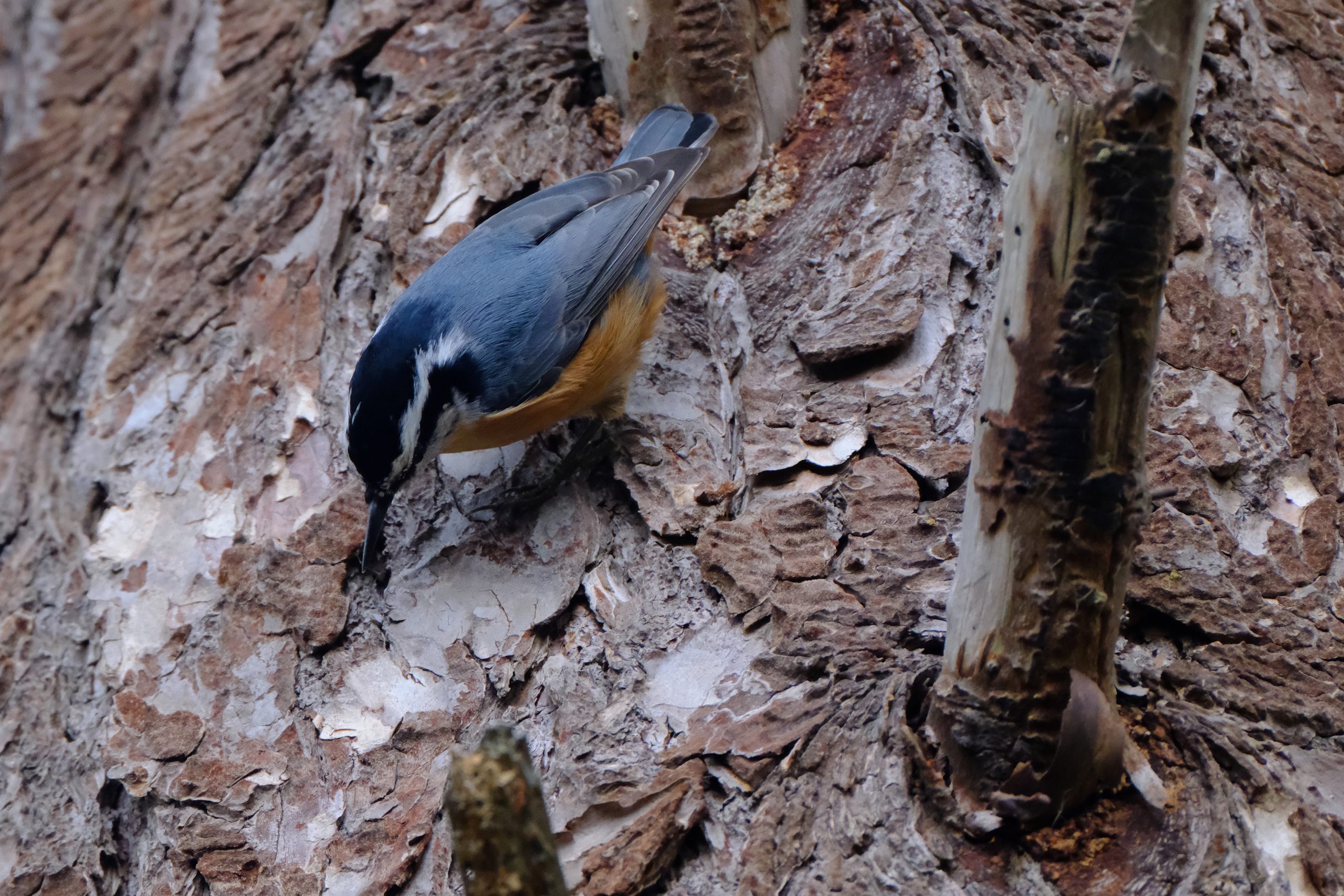
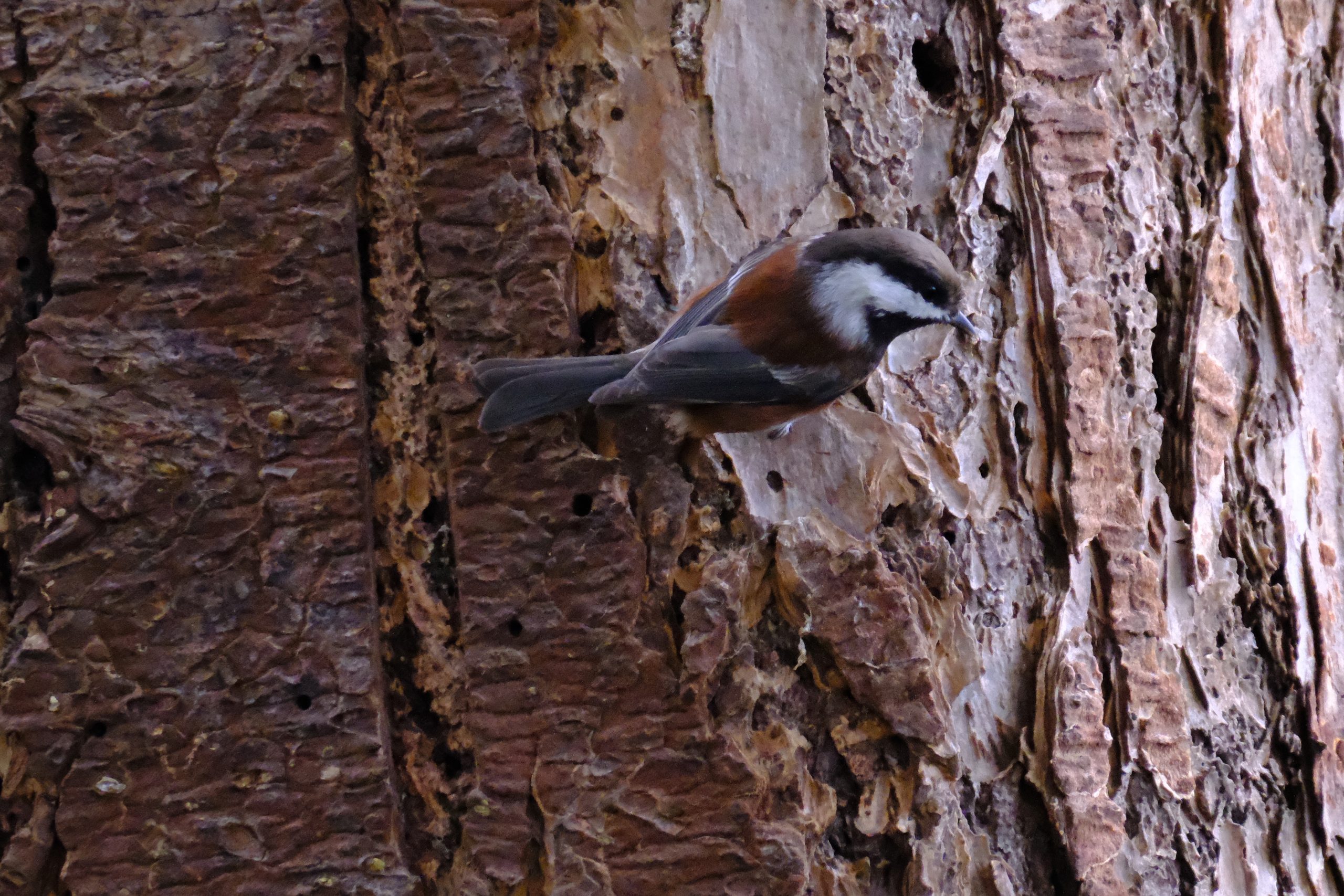
While black-capped chickadees are very friendly and fearless, they don’t stop moving either, so getting a good photo can still be difficult. Thankfully this specimen stayed put long enough for my autofocus to do its thing:
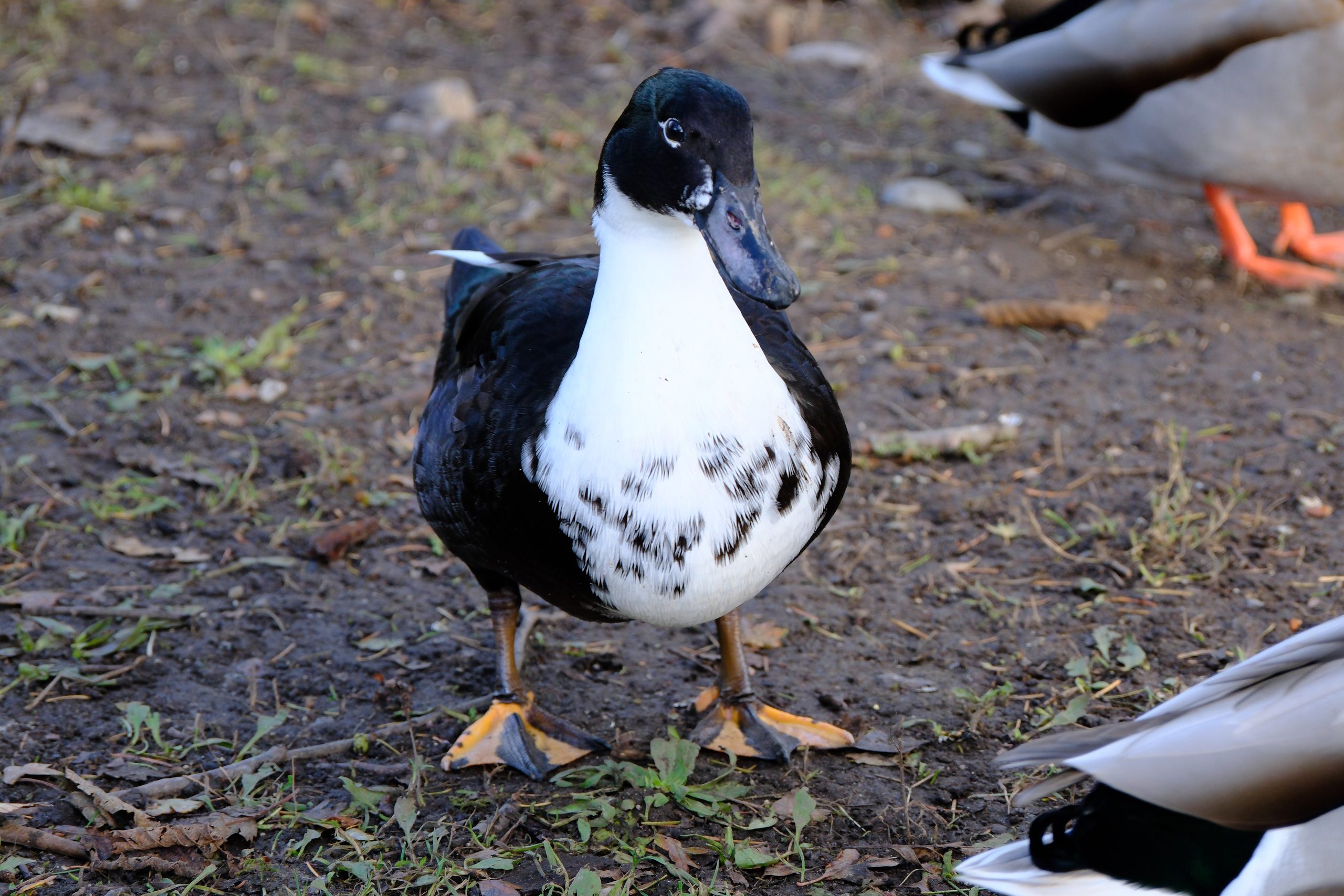
We also saw a couple oddballs by the entrance, a pale coloured pigeon and a black and white duck. The duck presumably was domestic before retiring here; the pigeon I presume is a leucistic thing?

Kris and Nicole headed out but it was still early enough in the day I went for another lap. I ran into someone who’d seen Viriginia Rails on the loop, which I didn’t find, and I was in close proximity to a Sora, which is rare but its call was unmistakeable (err, thanks to Merlin), but I didn’t see.
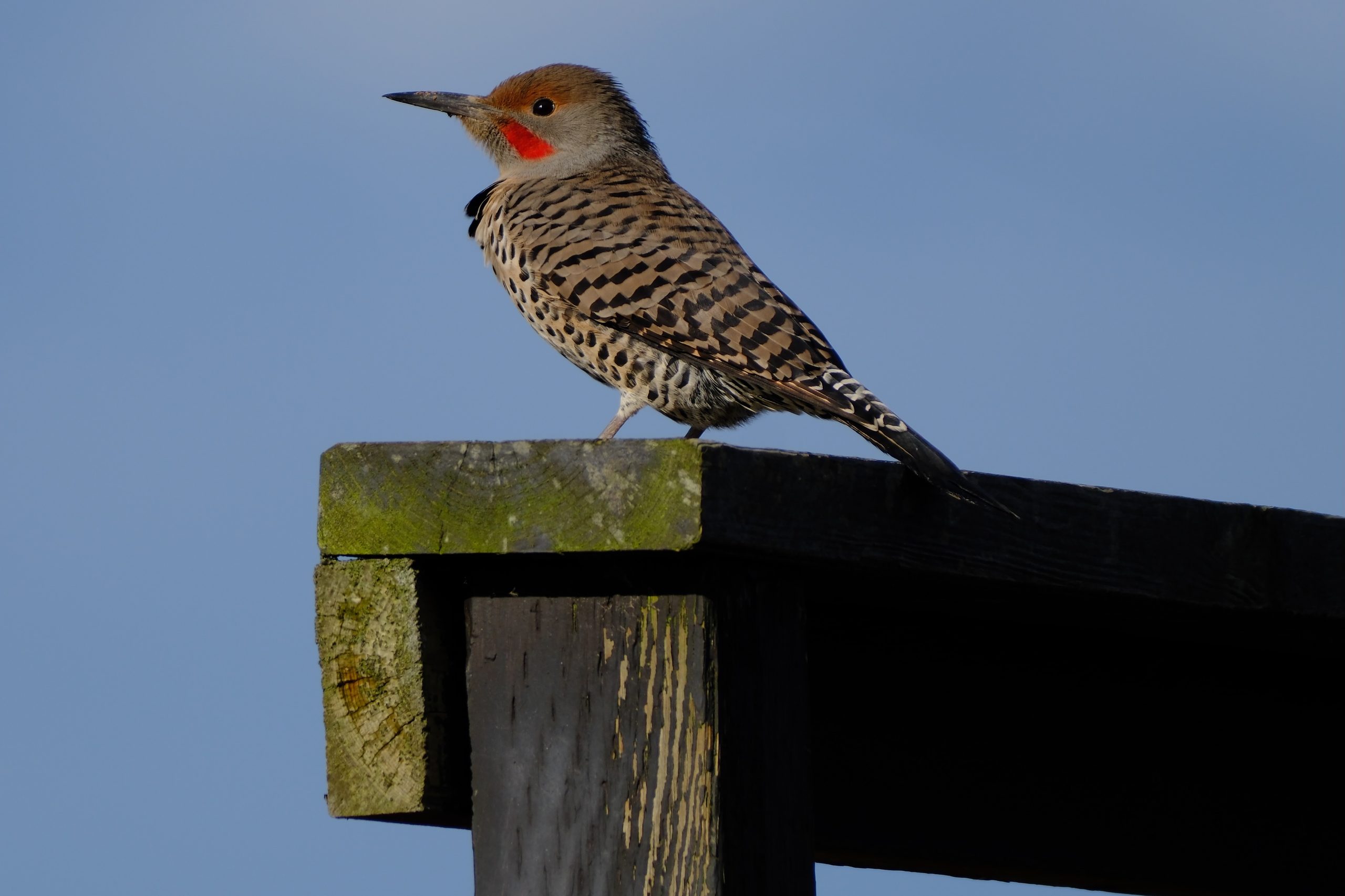
I did get a pretty banger photo of this northern flicker though! A common bird here, but doesn’t change the fact they are quite beautiful.
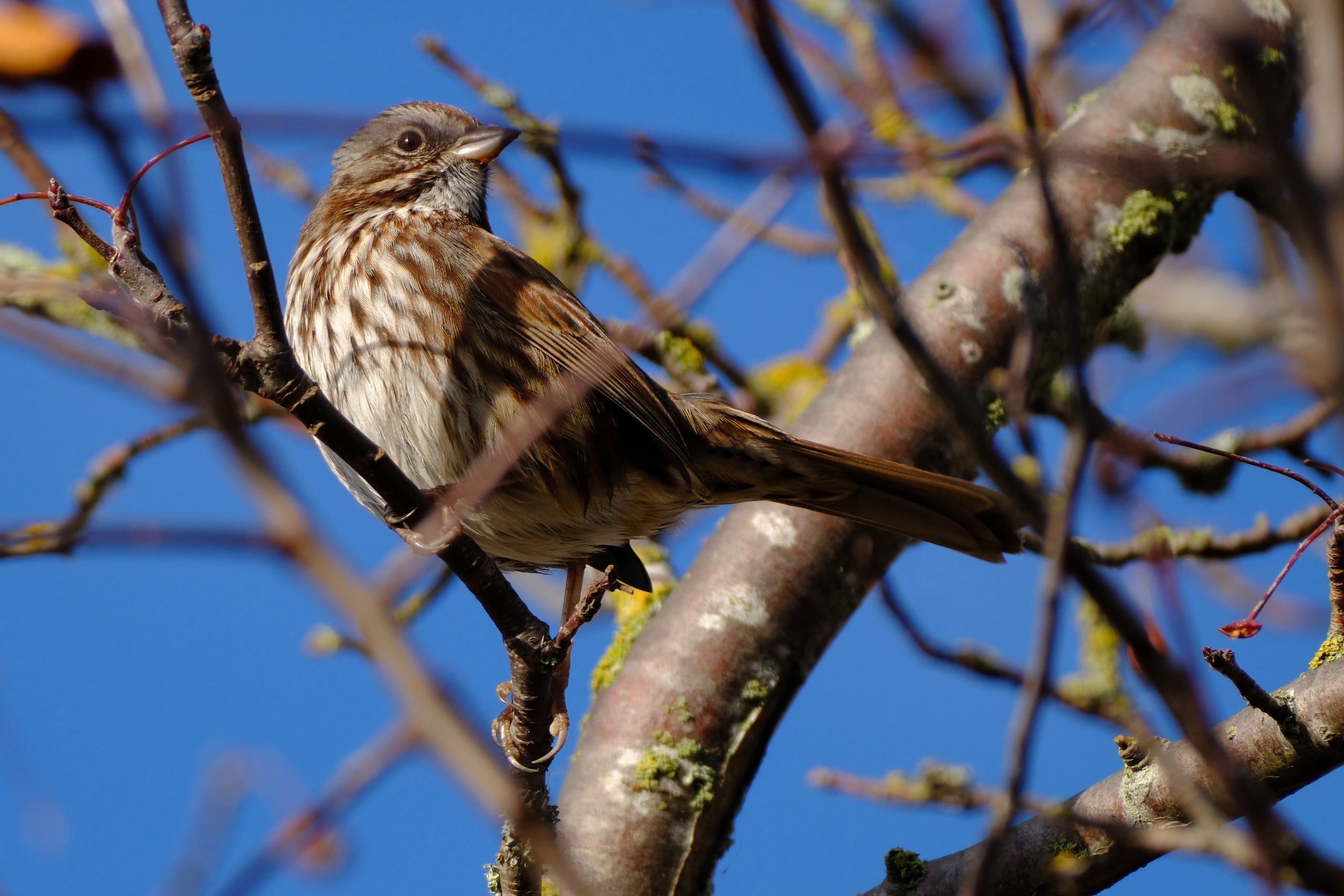
Speaking of common, I can’t help but appreciate the song sparrow. Here are a couple individuals from my second lap.

Kris and I were talking about coots, and how weird their feet are – thankfully I was able to get a decent photo of said weird feet on the second lap as well:

And I’ll leave things off with another common bird that I still find exciting to watch and photograph, the humble house finch. This one’s so red I wondered if it was a purple finch at first, but I don’t think so. It goes great with those berries though, right?

Leave a Reply